


Marketing Mix: How it’s Evolved
The Four P’s of Marketing:
Product, Price, Place & Promotion
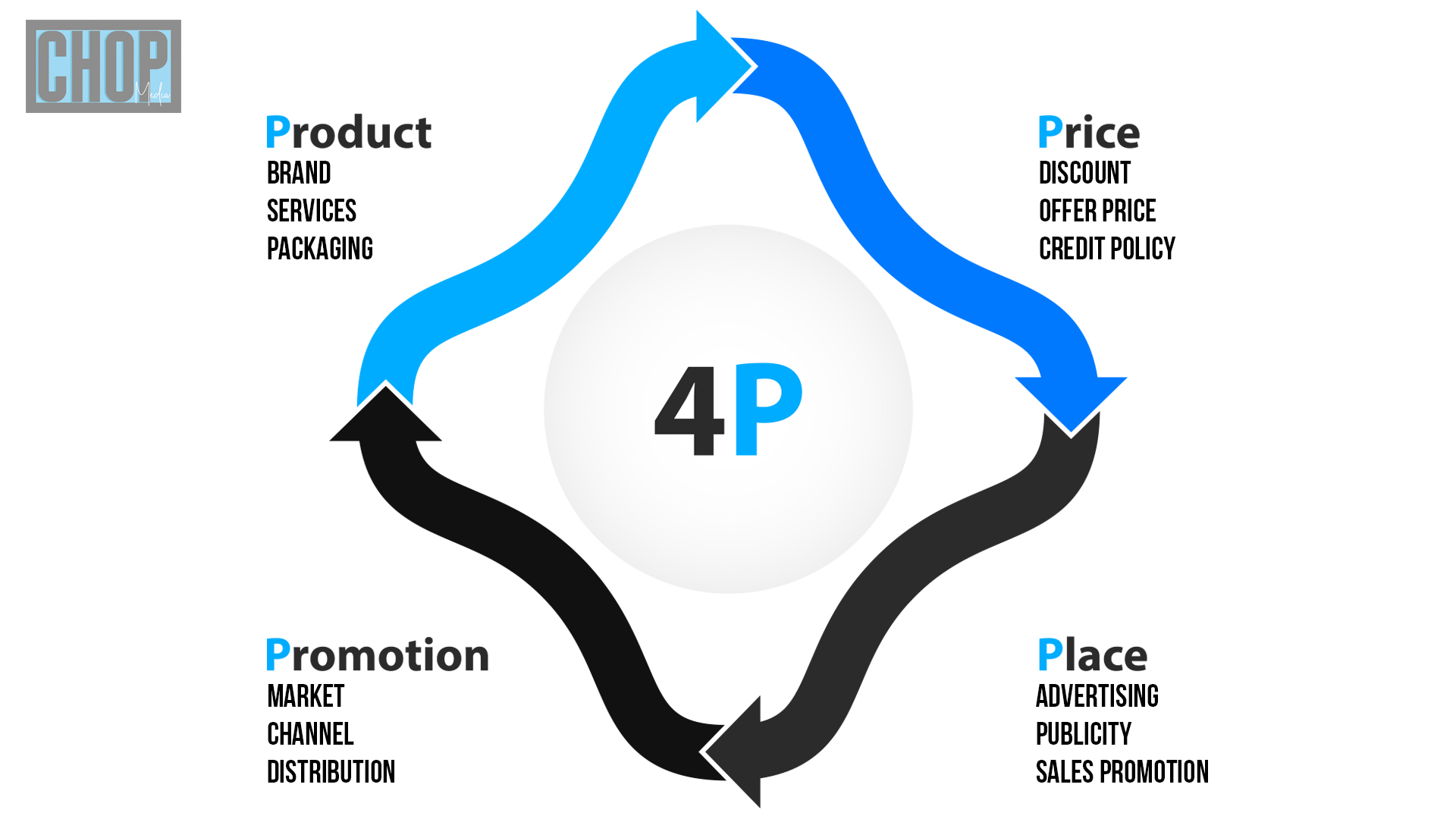
The product mix or marketing mix. Using the Product Mix we can determine a product’s value to a customer relatively easy. Below you’ll find a diagram the displays each individual P:
Product:
From tangible goods to intangible goods. Your product can be either something someone has that is physical in nature or something such as downloadable content, apps, virtual goods used on a virtual platform. During product launch it is important to determine statistical analysis as well as accounting for variables.
Price:
Through research the price of the product should be set so that neither the customer feels turned off or the company doesn’t incur a loss of revenue. The price is dependent on demand, which is identified by demand elasticity. The product is elastic if when the price is raised, the demand goes down (example: coffee, people will switch to tea) and if the product is inelastic if its demand is not affected after raising the price. (Example: gas)
Place:
Whenever the product is being sold would be considered the place. If your product is going to be placed inside of a shopping mall or if it’s going to be primarily through ecommerce, the place is just as important as the actual product. If you aren’t placing the product in front of your proper target audience, your sales will be highly effected.
Promotion:
Advertisements, personal endorsements, word of mouth, SEO, publicity etc. The way you promote a business will be a key factor in it’s success. Determining the avenue in which you decide to promote your product is similar to that of the place category. Marketing teams should be able to figure out the best strategy to promote your product be it traditional or innovative.
The Four R’s of Marketing:
Return, Relevance, Relationships, Reputation
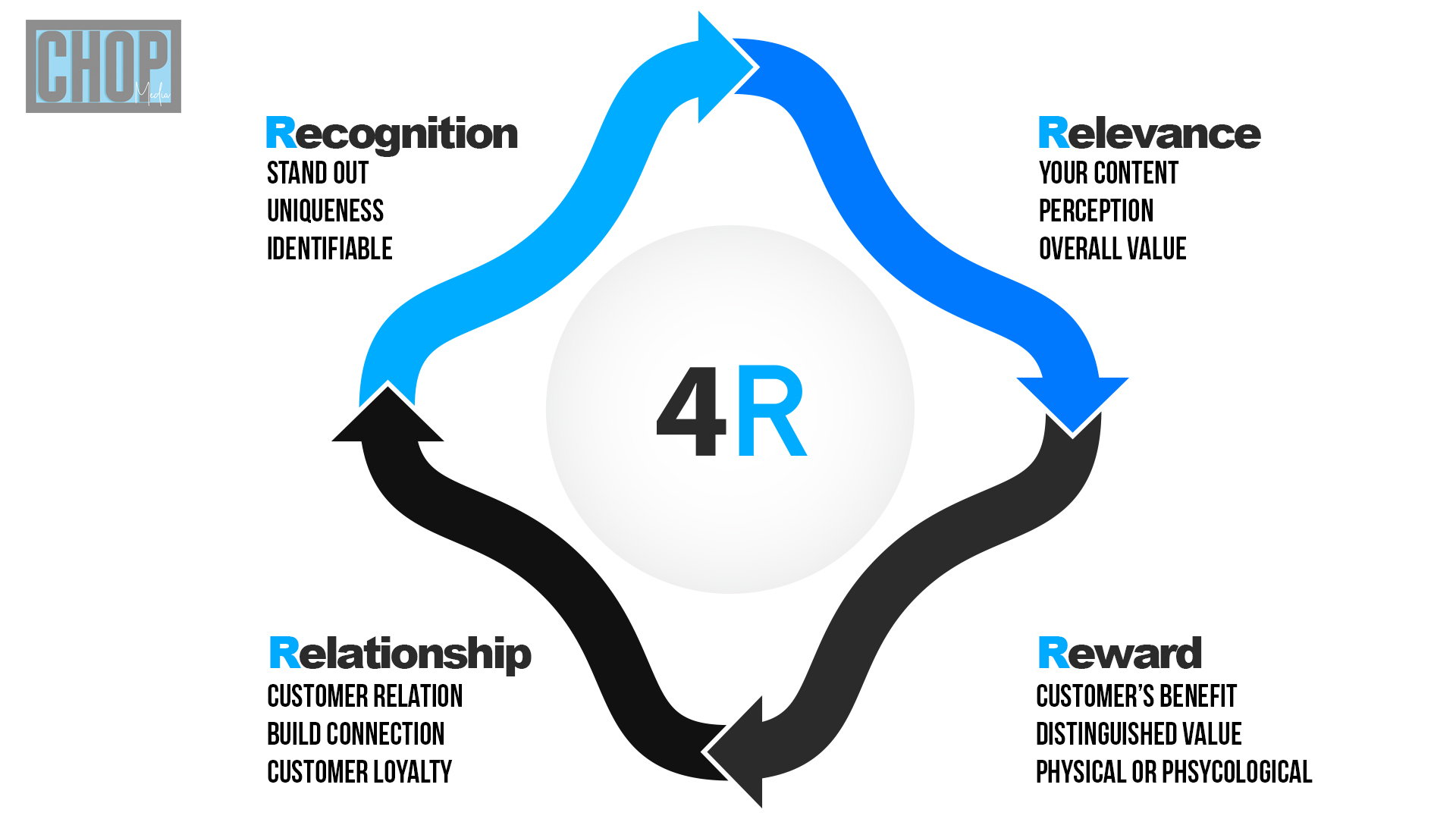
The difference from The Four P’s of Marketing: The classic 4 P’s of marketing (Product, Price, Place, Promotion) are becoming impractical to apply in real world due to the creation of marketing channels, the shift in consumer behavior, marketing strategies etc. In step the 4 R’s of marketing, invented to retain the same basic concepts of marketing and application in real world problems.
Recognition:
Make sure your product stands out from the crowd and is easily identifiable by the consumers. The last thing you want is to get lost in the shuffle, it’s always important to make an impression on your audience as once you’ve captured their attention they have a higher probability of developing brand loyalty.
Relevance:
If your target audience has no use for your product, you won’t succeed. Your product should benefit your target audience in some way. If your target audience can incorporate your product in their daily lives, then you have a much higher chance of developing that relevance we desire in a product.
Reward:
You don’t have to provide customers with a physical reward, the reward can also be a mental one. Customers tend to sway towards a product in which they perceive maximum benefit. Outdo your competitors if you have a similar product by offering some sort of incentive that isn’t being offered.
Relationship:
Without a doubt the most important aspect of a product being successful is developing and building relationships. Connecting your product to a consumer can be crucial to long-term success. When customers develop a connection and trust in your product you have to nurture the relationship by giving back and maintaining the standard the customer has become accustomed to.

